Posts

Showing posts with the label robberfly

Red-footed Cannibalfly

Image
Here's another Red-footed Cannibalfly . The picture might be a littler sharper than my previous cannibalfly post , but this one isn't eating anything. Still, I suspect that perching on a plant like this gives it a pretty good view of the area in the event that a meal flies by. Similar to other aerial insect predators like dragonflies, cannibalflies are skilled at snagging meals out of the air in midflight. Unlike dragonflies/damselflies, cannibalflies are in the fly order . (The flies comprise a slightly higher taxonomical level than the family.) My impression is that they don't get their cannibal name from eating other types of flies; I think they will go after their own. Fortunately for us, we're not on the menu. Unless you're handling them, it's extremely unlikely that you'll get bitten by one. I'm told the bite is painful but usually not harmful. But if you're most New Jersey arthropods, these guys are no doubt among the scariest arthropods you...
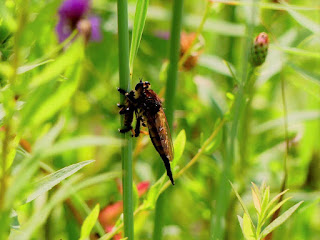
Red-footed Cannibalfly

Image
Here's a Red-footed Cannibalfly . At least I'm pretty sure that's what it is; a few years ago I went through a list of robberflies and couldn't find anything that looked like these guys  and  lives in New Jersey. It's hard to see, but I believe the cannibalfly is eating a smaller insect. My best guess would be a honeybee, which would be somewhat appropriate given that another colloquial name for the Red-footed Cannibalfly is the Bee Panther. (Maybe I should have included Bee Panther in my post about New Jersey Leopards . They also have yellow-and-black stripes on the tail; maybe Bee Tiger would have been a better name.) If you're this guy or a close relative, you get dinner by flying over to (usually) an arthropod, jab it with your proboscis, inject digestive juices into your prey, then suck the fluids out of it. (Maybe it's like an arthropod slurpee.) Apparently they will sometimes eat smaller cannibalflies, giving legitimacy to the "cannibal" pa...