Posts

Showing posts with the label mint

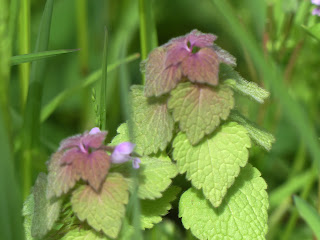
Red Deadnettle

Image
Continuing my encounters last April at the Raritan River Greenway [1], here's an abundant, early-flowering plant I saw. It's almost certainly a Red Deadnettle (aka Purple Deadnettle aka Purple Arcangel aka Red Henbit aka Deadnettle), but the plant is similar to  and related to the Common Henbit (aka Greater Henbit aka Henbit Deadnettle aka Henbit). Much of what is true about Red Deadnettle is also true about Common Henbit. Unlike Stinging Nettle but similar to Carolina Horsenettle , Red Deadnettle and Common Henbit are not nettles . Red Deadnettle and Common Henbit are instead mints . (Carolina Horsenettle is a nightshade .) They also don't sting the way nettles do; the name "deadnettle" came about because they look a bit like a nettle but with "dead stingers". The name "henbit" comes from its tendency to be eaten by chickens . Both Red Deadnettle and Common Henbit are native to Eurasia and North Africa but can now be found across much of N...
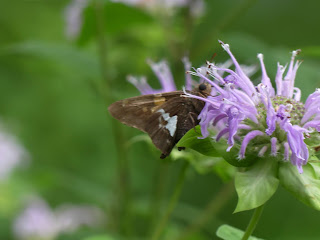
Silver-spotted Skipper on Wild Bergamot

Image
I encountered this Silver-spotted Skipper (butterfly) drinking nectar from a Wild Bergamot (mint). This is a fairly common sight. For a period of the summer, Wild Bergamot is a fairly prominent meadow wildflower, Silver-spotted Skippers are pretty common, and these skippers are attracted to colorful (blue, red, purple) wildflowers. I've talked before about Silver-spotted Skippers, so I'll mention a little about the Wild Bergamot: They're in the mint family , which also includes catnip and culinary herbs. The stems of mints tend to be squarish, to help you ID them. They're also called "bee balm", suggesting that they're popular with the bees, and thus tend to be nectar-rich. A relative, Scarlet Bee Balm , looks similar but is red. Scarlet Bee Balm doesn't seem to do well in my area - unlike Wild Bergamot I don't think I've seen it growing truly wild (though I've seen it in some Duke Farms flowerbeds where it's a little segregated from...