Posts

Showing posts with the label european robin

American Robin

Image
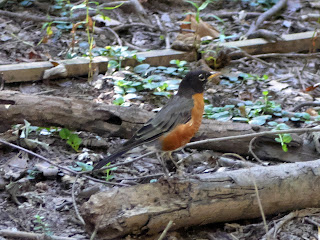
Here's someone that almost everyone living in the lower 48 US states knows, the American Robin . Though common, there's a lot you might not know about them: They're named after but are not particularly close relatives of the European Robin . The term "robin" has been used in the names of quite a few unrelated birds. They are related to our thrushes, including the bluebirds. Though associated with migration - their scientific name is Turdus migratorius - they can be found year round in many areas, including NJ. (It's unclear whether we have the same robins here all year round, or if the ones we see in the winter spend the summer up north and the ones we see in the summer head south for the winter. I'm betting that both occur.) They're opportunistic omnivores. In the summer their favorite foods consist of invertebrates, but in the winter they'll switch to berries. The orange-red plumage reminded Native Americans of fire, and they're sometimes con...
Juvenile American Robins

Image
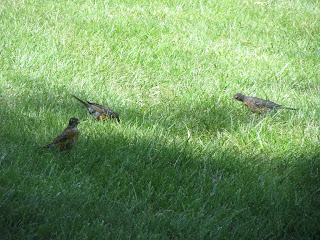
Here are some of my friendly neighborhood American Robins foraging through the grass - I wouldn't want to be an earthworm in that area. American Robins are in the thrush family of birds. Other thrushes in my area are Wood Thrushes, Hermit Thrushes, and Veeries, though the 2nd most seen is probably the Eastern Bluebird. Our robins do have closer thrush relatives, but they mostly live in different parts of the world. Somewhat confusingly though they're not closely related to the European Robin for which the American Robin was named. The two robins do share orangish feathering on the breast, and at one time were categorized in the same family, but DNA tests indicated they belong in separate families. You may think these birds are too speckled to be American Robins, and you'd be sorta right. Adult American Robins wouldn't have speckles, but juvenile American Robins do. I'm assuming that this camouflages them a bit when they're young and haven't learned how to...