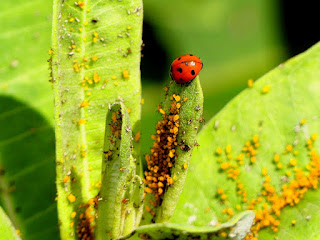
Insects Sharing Milkweeds

As I mentioned in a previous post, milkweed plants (like many native plants) have their own little communities , and it's not unusual to see insects sharing these plants. Here are a couple examples. Here is a Red Milkweed Beetle sharing its milkweed with what are probably (it's difficult to ID these little guys) Oleander Aphids (above and to the left of the beetle), the former a beloved native insect and the latter a somewhat destructive invasive one. (Or perhaps I've got the wrong aphid - apparently there are other possibilities .) July 28, 2021 at Sourland Mountain Preserve Photo 148654785, (c) jpviolette, some rights reserved (CC BY-NC) And here's another picture, this one of a Monarch caterpillar sharing a milkweed with (presumably) more of those Oleander Aphids. July 28, 2021 at Sourland Mountain Preserve Photo 148654667, (c) jpviolette, some rights reserved (CC BY-NC) Notes: I don't think these insects feel neighborly towards one another, though there may b...