Posts

Showing posts with the label carolina horsenettle

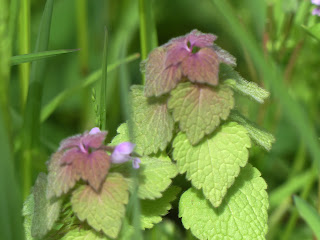
Red Deadnettle

Image
Continuing my encounters last April at the Raritan River Greenway [1], here's an abundant, early-flowering plant I saw. It's almost certainly a Red Deadnettle (aka Purple Deadnettle aka Purple Arcangel aka Red Henbit aka Deadnettle), but the plant is similar to  and related to the Common Henbit (aka Greater Henbit aka Henbit Deadnettle aka Henbit). Much of what is true about Red Deadnettle is also true about Common Henbit. Unlike Stinging Nettle but similar to Carolina Horsenettle , Red Deadnettle and Common Henbit are not nettles . Red Deadnettle and Common Henbit are instead mints . (Carolina Horsenettle is a nightshade .) They also don't sting the way nettles do; the name "deadnettle" came about because they look a bit like a nettle but with "dead stingers". The name "henbit" comes from its tendency to be eaten by chickens . Both Red Deadnettle and Common Henbit are native to Eurasia and North Africa but can now be found across much of N...

Carolina Horsenettle

Image
Here's some Carolina Horsenettle from last autumn. I'm a little surprised I haven't shown Carolina Horsenettle before. It's not an all-over-the-place plant, but with its small, tomato-like fruit it's fairly eye-catching. The fruit of this plant is a fairly close relative to the tomato; they're in the same genus . But they're also in the nightshade family of plants. This family of plants contains many familiar food plants, including tomatoes, potatoes, eggplants, and some peppers. But other plants in this family are very poisonous, and unfortunately for would-be wildlife foragers, the Carolina Horsenettle is one of the poisonous plants. The fruits in particular are perhaps the most poisonous part of the plant, though all parts of it are somewhat poisonous, at least to us and livestock. Apparently though some wild birds like turkey and quail can eat the fruit . What this plant is not is a nettle . It probably got the "nettle" part of it's name...