Posts

Showing posts with the label periodical cicada

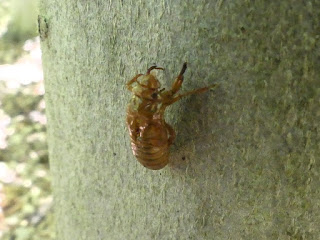
Periodical Cicada Exuviae
Image
I probably should have posted this with my spring/summer Periodical Cicada posts; this is the exuviae  (pronounced sorta like ig-ZOO-vee-EE) of one of our Periodical Cicadas . In some areas these things were all over the place this year. This is the remains of the exoskeleton of a cicada nymph; the nymph stage is the one just prior to them becoming flying, screaming adults we all know and love. I specifically picked this picture because its unambiguously the exuviae rather than a nymph that's on the verge of shedding its exuviea, a process called ecdysis  (pronounced EK-duh-sis by some, though ek-DEE-sis seems to be out there too). You can partially see through it in places, guaranteeing that there's no nymph in there. Although they emerge at somewhat different times of the year, I usually distinguish the Periodical Cicadas from the Annual Cicadas by color, especially the red eyes of the former versus the green eyes of the latter. Timing-wise, this was almost certainly a Perio...

Brooding Cicada

Image
Here's another one of the periodical cicadas I met at Sourland last week. Today I want to give a fairly quick discussion not of brooding cicadas with emotional issues, but of the cicada broods themselves. Our periodical cicadas consist of 3 groups, 7 species and 15 broods. The 3 groups consist of extremely similar species, sometimes where the main difference between the species is the brood cycle. Note I can't use common names since some of these guys don't have a common name beyond the periodical cicada umbrella. Here are the groups: Decim group . This is the biggest group, with 3 species. It has 1 17-year cicada species, Magicicada septendium (Pharaoh Cicada), and 2 13-year cicada species, Magicicada tredecim and Magicicada neotredecim. DNA differences and slight differences in their calls has led entomologists to split M. neotredecim off from M. tredecim. Just looking at them, you probably wouldn't be able to distinguish any of these cicadas. Cassini group . This gr...

Periodical Cicada

Image
They're back! Here's a periodical cicada I met last week at the Sourland Mountain Preserve in Hillsborough. These red-eyed bugs (and they are true bugs ) have been living underground for 17 years, giving them one of the most interesting lifecycles around. Don't call them locusts though, since that term refers to grasshoppers, a very different kind of insect. Though we and other parts of the world have annual cicadas , the periodicals are a North American exclusive; nobody else has cicadas with the 17 year and 13 year lifecycles of the periodical cicadas. The periodical cicadas emerge in broods that generally occur every 13 or 17 years with the intention of flooding an area with so many cicadas that even if many get eaten by predators, there will still be ample cicadas around to breed and thus continue the species. And while their predators will probably thrive in the year the cicadas emerge, their predator numbers will presumably have returned to normal by the next time t...