Posts

Showing posts with the label fly

Don't Call Us Flies

Image
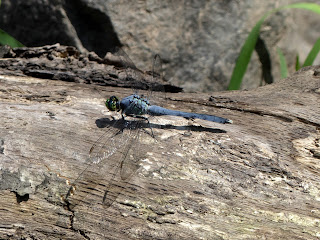
The "fly" terminology can be misleading. Lots of critters with "fly" in their names aren't true flies at all. Flies are insects with only a single pair of wings, differentiating them from the wasps/bees, the moths/butterflies, and the dragonflies/damselflies (among others). And unlike beetles where the 2nd pair of wings have evolved into wing-protecting elytra , the 2nd pair of fly wings have evolved into rotational sensing  halteres , enabling especially acrobatic flight. Here are a few of the non-flies with "fly" in their names. dragonfly != fly, dragonfly == odonate July 28, 2021 at Sourland Mountain Preserve Photo 148654312, (c) jpviolette, some rights reserved (CC BY-NC) lanternfly != fly, lanternfly == bug July 28, 2021 at Sourland Mountain Preserve Photo 148654536, (c) jpviolette, some rights reserved (CC BY-NC) butterfly != fly, butterfly == lepidopteran July 28, 2021 at Sourland Mountain Preserve Photo 148654418, (c) jpviolette, some rights r...

Tiger Bee Flies Mating

Image
Tiger Bee Flies are not tigers , nor bees , but are a type of fly . (This is fairly normal species naming nomenclature; if the name consists of multiple things, look at the last name and you're most likely to get a sense of what kind of species you've got.) These guys may look like horseflies on steroids, they're much closer to being human allies than human adversaries: As adults, they are basically pollinators that don't bite humans at all. They might be of benefit to your flower or vegetable garden though. As larvae, they are considered to be the primary parasite of the Carpenter Bees . The females lay eggs in the wood cavities in which Carpenter Bees lay their eggs, and the Tiger Bee Fly larvae will attach to the Carpenter Bee larvae and eventually consume them. (The Carpenter Bees sometimes to minor damage to wooden structures.) It seems appropriate that one of my area's largest bees is parasitized by one of my area's largest flies. Based on pictures I...

Red-footed Cannibalfly

Image
Here's another Red-footed Cannibalfly . The picture might be a littler sharper than my previous cannibalfly post , but this one isn't eating anything. Still, I suspect that perching on a plant like this gives it a pretty good view of the area in the event that a meal flies by. Similar to other aerial insect predators like dragonflies, cannibalflies are skilled at snagging meals out of the air in midflight. Unlike dragonflies/damselflies, cannibalflies are in the fly order . (The flies comprise a slightly higher taxonomical level than the family.) My impression is that they don't get their cannibal name from eating other types of flies; I think they will go after their own. Fortunately for us, we're not on the menu. Unless you're handling them, it's extremely unlikely that you'll get bitten by one. I'm told the bite is painful but usually not harmful. But if you're most New Jersey arthropods, these guys are no doubt among the scariest arthropods you...